
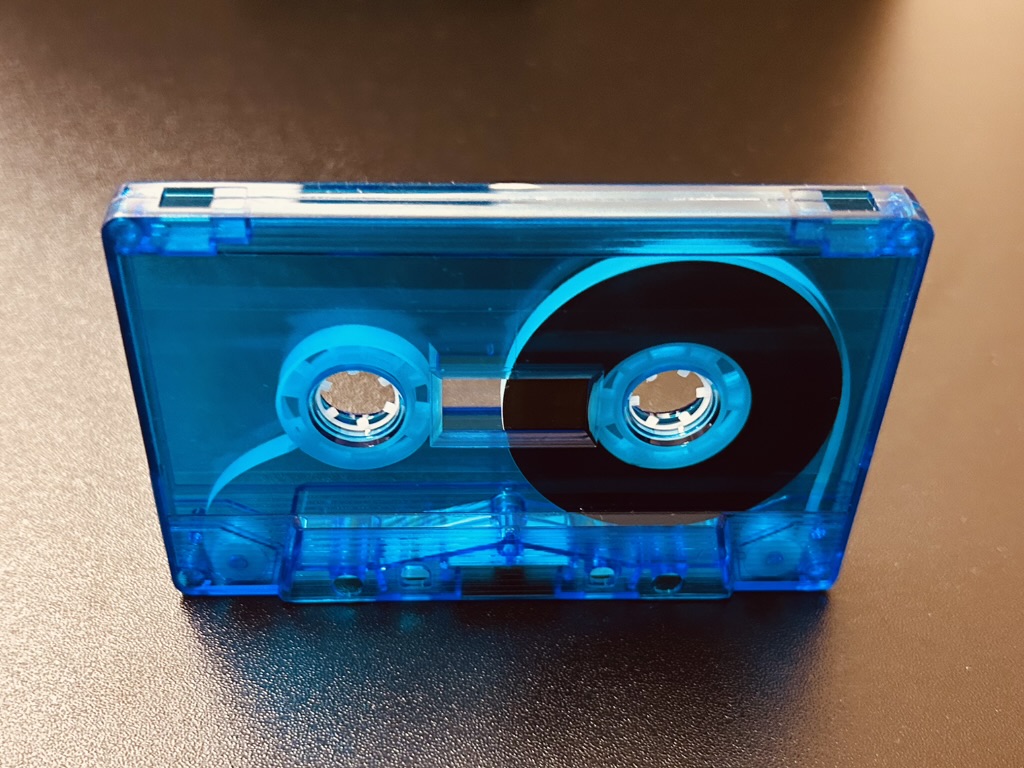
How Is Cassette Tape Made? NAC and Revox Break It Down
A conversation about craft, chemistry, and the future of analog tape
National Audio Company has been devoted to true sound reproduction since 1969. Recently, Steve and Phil Stepp of NAC sat down with Lucas Lange of Revox for the debut episode of the Revox “truth In sound” podcast.
Their fascinating discussion about cassette tape manufacturing is one of the most candid you’re likely to hear anywhere. This blog draws from that conversation. Click the box below to listen, or go to NAC’s YouTube channel or Revox’s YouTube channel.
Who Is National Audio Company?
National Audio Company is keeping analog alive by gathering and restoring unique equipment, coalescing talent, enhancing production, and doubling down on their belief that magnetic audiotape is going nowhere but up.
To understand where NAC is today, you have to start at the beginning. And the beginning, as NAC President Steve Stepp tells it, involves an Ampex salesman, a plastic cassette, and a prediction.
NAC started as a distributor for Ampex Corporation, selling reel-to-reel recording tape to studios and radio stations across the United States. They were also loading broadcast tape cartridges, a format used by radio and TV stations to record commercials and music before the digital age arrived. Business was good, and NAC had built a solid reputation in both the recording and broadcast markets.
Then one day, the Ampex sales rep walked in holding something new.
“He held an audio cassette in his hand and said, ‘What do you think of this?'” Steve recalls. “And I said, ‘Well, it looks like if you put that in a little doll, it might have a voice. I can’t think of anything else you can use it for.’ And he said, ‘It’s gonna be a little bigger than that.'”
He wasn’t wrong.
NAC began selling cassettes, and demand quickly outpaced supply. Mom-and-pop loading operations couldn’t keep up. So in 1980, NAC bought their first King MK2000 cassette loading machine (a refined version of the King 760, a previous version). It was delivered in the middle of a blizzard one cold December night.
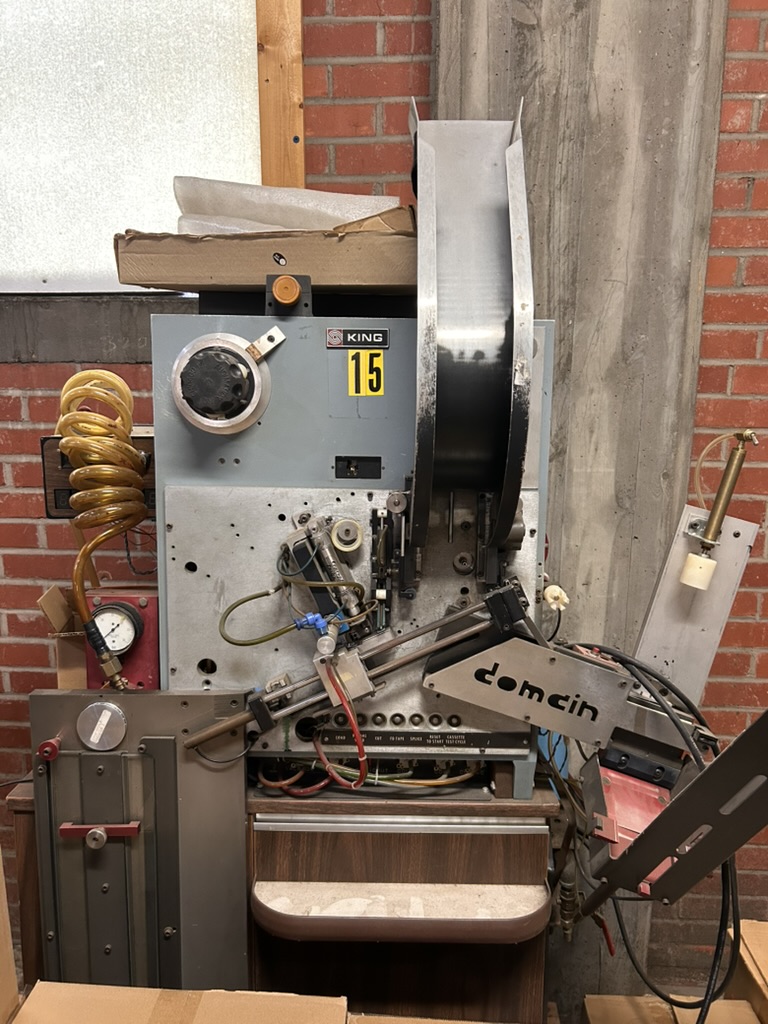
“We said, ‘That’s great. We’ll never need another one. This thing can make 2,500 cassettes an hour,'” Steve says with a laugh. “Next year, we bought two more. And then we bought four more. Soon, we had 16 machines.”
NAC outgrew one building, then another. As the broadcast industry moved to digital and the CD began displacing vinyl and cassettes, most manufacturers got out. NAC got in deeper. When opportunities arose, they bought up competitors’ equipment, bringing it all back to Springfield. And when the CD eventually faded and analog came roaring back, NAC was ready.
“Duplication and loading equipment from the whole recording industry in the United States had pretty well gotten concentrated into our building,” Steve says.
Today, NAC counts virtually every major US record label among its customers, along with nearly 6,000 labels worldwide. And with their recent acquisition of ATR Magnetics, they are now arguably the largest manufacturer of audio tape in the world.
What’s Involved in Making Cassette Tape?
Folks who love cassettes think of them like little magic boxes with music inside. But few understand how the audiotape is made.
During the podcast, NAC Vice President Phil Stepp broke it down.
It starts with chemistry. Iron oxide (the magnetic material that actually captures sound) gets mixed with polyurethane and organic solvents that thin everything down into a slurry. Secondary ingredients manage pH, viscosity, and binding. As part of NAC’s painstaking process, the mixture is milled 12 times through cubic zirconia, grinding the oxide into finer and finer particles for a more uniform coating. It’s filtered four times through a five-micron filter along the way.
Then comes the coating line.
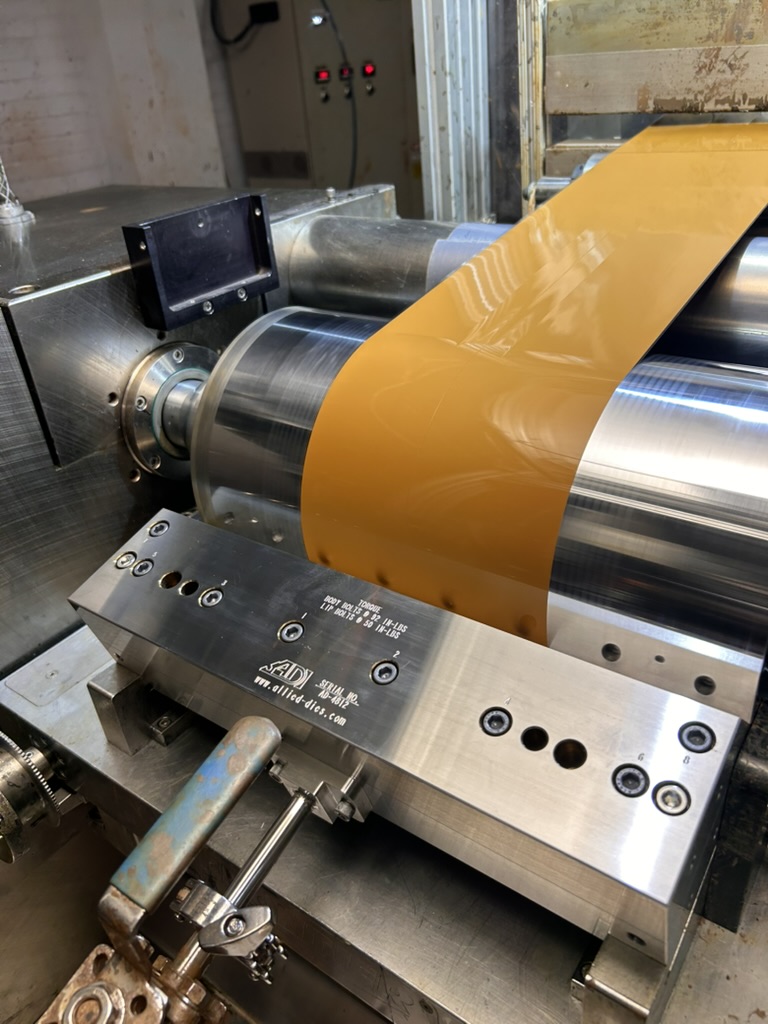
“The slurry is driven through a slot die, which coats basically edge-to-edge on polyester base film,” Phil explains, “making a thin coat of about four to four and a half microns thick, which then goes through 60 feet of ovens to cause the organic solvents to evaporate off.”
What comes out the other end is wound onto a jumbo reel roughly 6.5 inches wide. It’s wide enough, when slit down, to yield about 40 hubs of cassette tape.
But the process isn’t finished. Next comes calendering. The way Steve talks about its importance offers the most memorable description of the whole operation.
“The difference between a lump of coal and a diamond is pressure and heat,” he says. “We’re starting out with raw tape. After 10,000 pounds of pressure, six times, with heat, we have created a diamond. We go from a reel of tape that looks dull on the surface to a tape that is very high gloss, very smooth.”
The result is a tape that wraps playback and record heads more precisely, reduces head wear, and delivers better signal-to-noise performance. And before any of it ships, NAC pulls one reel at random from every jumbo and tests it, measuring audio output and frequency response from 62.5 to 16,000 Hz.
“If it doesn’t meet specs, it’ll be rejected,” Steve says simply. “We don’t find tape like that very often. But when we do, we pull it out.”
The 4 Types of Cassette Tape
For listeners new to the world of analog tape, a brief history lesson is in order. There have been four types of audio cassette tape, and understanding them helps explain where the market is today and where it’s going.
- Type 1 is ferric oxide tape, standard, normal bias, and still the foundation of the cassette world. It accounts for roughly 95% of all cassette tape used globally and about 99% of what NAC produces
- Type 2 was high-bias tape, typically chrome or cobalt. It offered brighter highs and better overall performance. However, chrome tape is too environmentally hazardous to produce, causing too many toxic byproducts. As a result, no new chrome or cobalt tape has been widely distributed in 20 to 30 years
- Type 3 was a short-lived hybrid of chrome and ferric oxides. Good tape, but expensive to make and complicated by the same chrome issues. It came and went quickly
- Type 4 was metal-particle-evaporated tape. It was technically impressive, with outstanding audio performance, but brutally abrasive to playback heads. “It might perform very well for a while,” Steve notes, “but after a short time, it would have worn grooves and ruts in your heads.” Type 4 didn’t last long either
Which brings the market back to Type 1…and soon, Type 2 again. NAC has sourced a high-grade cobalt oxide and is currently developing a Type 2 formulation in consultation with Revox.
What Separates Good Tape from Cheap Tape?
It’s a question worth asking directly, because not all cassettes are created equal, and the gap between a quality cassette and a bargain-bin one is wider than most people realize.
It starts with the cartridge. The plastic shell that houses the tape is important for many reasons.
In an audio cassette deck, unlike a reel-to-reel machine, all tape guidance happens inside the cartridge itself. The corner rollers, the pressure pads, the hubs—every component affects how the tape moves across the heads. Get it wrong, and even great tape sounds mediocre.
NAC sources their cartridges from a single European manufacturer. The only one, Steve says, still making them to a standard worth using. The alternatives offer no consistency in tolerances or quality control.
“You can buy a set of cartridges from China, and you get what you pay for,” Steve says. “Even within the same batch, you’re gonna have different manufacturers of the little corner rollers and the pressure pads. The guidance is not as exact.”
Then there’s the oxide. This is where NAC believes it has a genuine advantage over anything else currently on the market.
“We have basically taken the oxide that was used previously on the world’s best reel-to-reel audio mastering tapes,” Phil says, “and we’ve miniaturized that for audio cassette tape. And that is what we’ll be making for Revox.”
“If you start with poor oxide, you can’t get good tape,” Steve says.
It’s the gloss of the finished tape that tells the story. A well-calendared tape made with top-quality oxide has a high, consistent sheen. A cheap tape looks dull. Steve says that’s the first giveaway.
What’s Coming Next
As the alliance between NAC and Revox ramps up, National Audio Company isn’t resting on its laurels. To ensure they’re making the best cassette tape with the highest possible sound quality, they’ve invested nearly $1 million in their manufacturing operation this year alone.
NAC’s production process has been enhanced up and down the line, featuring a new coating station, precision-manufactured customized slot die, updated film guide, and upgraded calendering—all aimed at achieving more precise, more consistent tape coating.
They now have all three of Ampex’s original coating lines, restored and scheduled to come online later this fall. When fully operational, production capacity could triple.
“We’re looking at being able to make all the tape that everybody in the world can use,” Steve says. “We’re really looking at that type of scale.”
The partnership with Revox is central to that vision. Together, the two companies aim to produce the finest Type 1 cassette tape available anywhere, and eventually the only Type 2 tape on the market.
That combination, Phil and Steve believe, represents something the cassette world hasn’t seen in decades: not just a continuation of what came before, but a genuine step forward.
Why It Matters
National Audio is keeping analog alive by gathering and restoring unique equipment, coalescing talent, enhancing production, and doubling down on their belief that magnetic audiotape is going nowhere but up.
Cassettes are still an important part of the music landscape. In fact, they’re experiencing a renaissance. What this conversation about cassette manufacturing makes clear is that NAC knows analog, and they’re ready to keep the tape rolling for cassette lovers around the world.
Contact National Audio Company to learn more or to start your own project.
You’ll be hearing more from NAC.